Why Wine Country Is the Smartest Team Offsite You Haven't Planned Yet
The average corporate offsite now spends 63% of its time on activities that have nothing to do with work — and that number comes from Emburse's 2025 State of Corporate Offsites report, which surveyed 2,000 U.S. employees and found that the old format — two days in a hotel ballroom with catered sandwiches and a guest speaker — is essentially dead. Companies have figured out, often the hard way, that slide decks don't build teams. Shared experiences do.
Which is why booking a wine country offsite isn't an indulgence. It's one of the sharpest decisions you can make with your Q3 budget.
The Offsite Has Changed. Has Your Format?
Here's the quiet truth about corporate retreats right now: the companies doing them well aren't running the same playbook they used in 2018. They've shifted their budgets, their expectations, and their venues.
The share of companies hosting no offsite at all fell from 16% to just 4% between 2019 and 2024, according to the same Emburse report. High-performing companies average 2.8 offsite events per year. They favor restaurants, retreat centers, and outdoor recreation facilities over conference rooms. And 59% of companies have increased their offsite budgets since 2019.
That last one matters. This isn't a category of spend that survives budget season because executives have soft spots for it. It survives because it delivers.
Atlassian tracked this internally: employees who meet their teams in person experience a 27% boost in team connection, and that boost lasts four to five months. One well-designed day together does the work of months of Slack threads and weekly standups. A Babson College study following 700+ law firm partners over eight years found that offsite attendees generated 24% more cross-team collaboration requests in the two months following the retreat — and about 17% of the working relationships formed there were still active two years later.
The math is uncomfortable to ignore. Gallup finds that global employee engagement fell to 20% in 2025, its lowest point in years, costing the world economy roughly $10 trillion in lost productivity. Each disengaged employee costs an organization around $16,000 annually. Offsites aren't a morale budget line — they're a retention and productivity investment.
Why Wine Country Specifically Works
Offsites are only as good as what they actually do to the room. A ropes course with a mandatory team challenge has the form of team building without much of the substance. The research is consistent on what genuine connection actually requires — the kind that changes how people work with each other: reduced hierarchy, shared discovery, sensory engagement, and an environment that feels categorically different from where you spend your normal days.
Wine country delivers all four.
The hierarchy thing is real
In a conference room, people perform their roles. The CFO speaks with authority. The junior hire defers. The org chart governs every interaction in ways no one has to articulate. A wine tasting room breaks this down — not through forced trust falls, but organically: everyone is a student. The CEO doesn't know more about what they're smelling than the new hire does. That shared uncertainty levels the playing field in a way that authentic conversation can actually follow.
Research from Rogers Lowell finds that natural settings specifically flatten office hierarchies and encourage authentic participation. And Kenexa Research Institute data shows that 50% of positive changes in work communication can be attributed to social interactions outside of work-related matters. Wine tasting, by definition, is that.
Shared discovery creates shared language
There's a wine blending session where your team chooses components, debates ratios, names the blend, and ends up with a bottle they made together. This is not a metaphor for collaboration — it is collaboration, with immediate, tangible stakes and a souvenir at the end. These small shared challenges — a blind tasting, a food-and-pairing competition, a vineyard walk during crush season — become the inside jokes and reference points that teams carry back into the office.
The setting does work you can't replicate indoors
Spending time in natural environments measurably reduces cortisol levels. Group Dynamix data shows outdoor team building improves team performance by up to 25% and reduces absenteeism by 41%. Rolling vineyard hills, open-air tasting patios, and the smell of harvest in the air aren't just pleasant aesthetics — they're conditions that loosen people up in ways that lead to better conversations.
Bizzabo's 2026 State of Events Benchmark Report found that 75% of event professionals rate immersive experiences that allow attendees to disconnect and focus as highly valuable. Wine country is, structurally, an immersive experience. That's not marketing language. It's what it is.
September: The One Insider Tip You Actually Need
If you're planning a wine country team offsite — and you should be — September is the month. It's also the busiest month for corporate offsites in general, according to Retreats and Venues, tied to post-summer strategic realignment and Q4 planning cycles.
Here's what makes it almost unfair: September is harvest season in NorCal wine country. Crush. Fermentation. The whole production cycle in motion. Grapes being picked, tanks bubbling, the air smelling of something you can't quite name but will not forget. This is not a generic vineyard visit — it's wine country at its most alive.
Tour your team through the crush pad at an Amador Zinfandel producer. Walk the rows at a Napa estate during harvest. Watch the sunrise over El Dorado's Sierra Foothills before you taste. The combination of sensory richness and natural drama makes September visits feel categorically different from any other time of year — and entirely different from anything a conference room could offer.
Book early. September fills quickly precisely because planners know this.
Four Wine Regions, One Operator, No Airport
For teams based in Sacramento — or anywhere within a reasonable drive of Northern California — the geographic case for wine country is almost unfair.
Napa Valley is 90 minutes from Sacramento. Sonoma County is about the same. Amador County, with its award-winning Zinfandels and boutique estate wineries, is under an hour and a half. El Dorado County's Sierra Foothills producers — including some serious names — are even closer. No flights, no checked bags, no TSA lines, no three-hour pre-travel logistics window that guts a full workday.
Rising airfare costs are already pushing corporate retreat planners toward drive-to destinations. For Sacramento-based teams, this isn't a compromise — it's an upgrade.
NapSac covers all four regions
NapSac Wine Tours is one of the few luxury tour operators in NorCal that operates across all four of these wine regions: Napa, Sonoma, Amador, and El Dorado. That breadth matters more than it sounds. Different team sizes, budgets, and goals fit different regions. A 10-person executive team might want the premium positioning of a private Napa estate experience. A 40-person department might want Sonoma's range — hotel rooms there run about 30% less than Napa while the wine quality is genuinely comparable. A Sacramento-area startup doing its first offsite might find Amador County's intimacy and accessibility perfect.
Having an operator who knows all four regions, has existing relationships with the wineries, and can match your group to the right experience is worth more than it sounds.
The logistics are handled
The most underrated part of an organized wine country tour is what you don't have to do. Transportation coordinated. Wineries booked. The itinerary sequenced so the group isn't doubling back on mountain roads or killing an afternoon waiting for a reservation. NapSac handles all of it, which means the person who usually ends up wrangling the group chat gets to actually enjoy the day.
This matters particularly for wine country, where responsible transportation isn't optional — it's table stakes. A tour operator with professional drivers and established logistics removes a meaningful planning and liability burden from whoever is organizing the event.
What a Corporate Wine Tour Day Actually Looks Like
The activities that work best for teams aren't the ones that feel manufactured. They're the ones that give people something to do together while the actual team building happens around the edges.
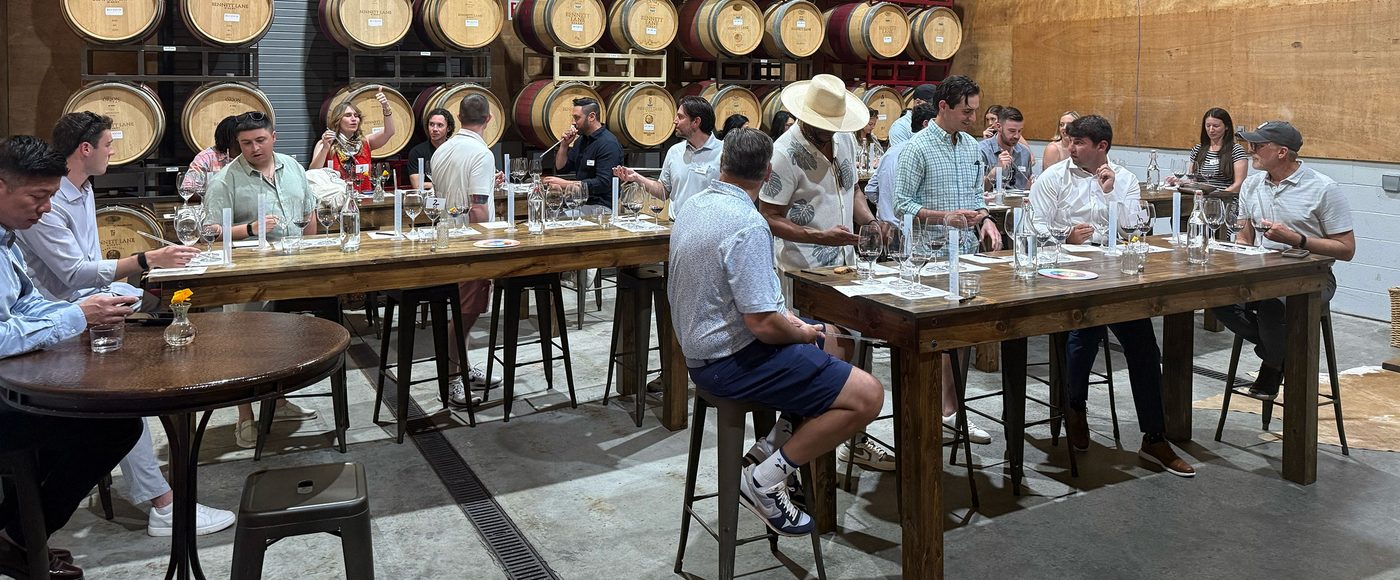
A well-designed corporate wine tour day might include: a private winery visit with a winemaker walkthrough of the cellar, a blind tasting competition run in small groups (collaborative, lightly competitive, immediately fun), a wine blending session where teams choose components and create their own label, and a seated food-and-wine pairing lunch on a vineyard terrace. By early afternoon, people who barely talked in the office are arguing, with genuine investment, about whether the 2022 vintage or the 2021 is more food-forward.
That's the offsite working.
BetterUp research found that employees with high belonging show 56% higher job performance, 50% lower turnover risk, and 75% fewer sick days. The primary thing that creates belonging isn't a slide deck about company values. It's shared experience with people you genuinely know.